

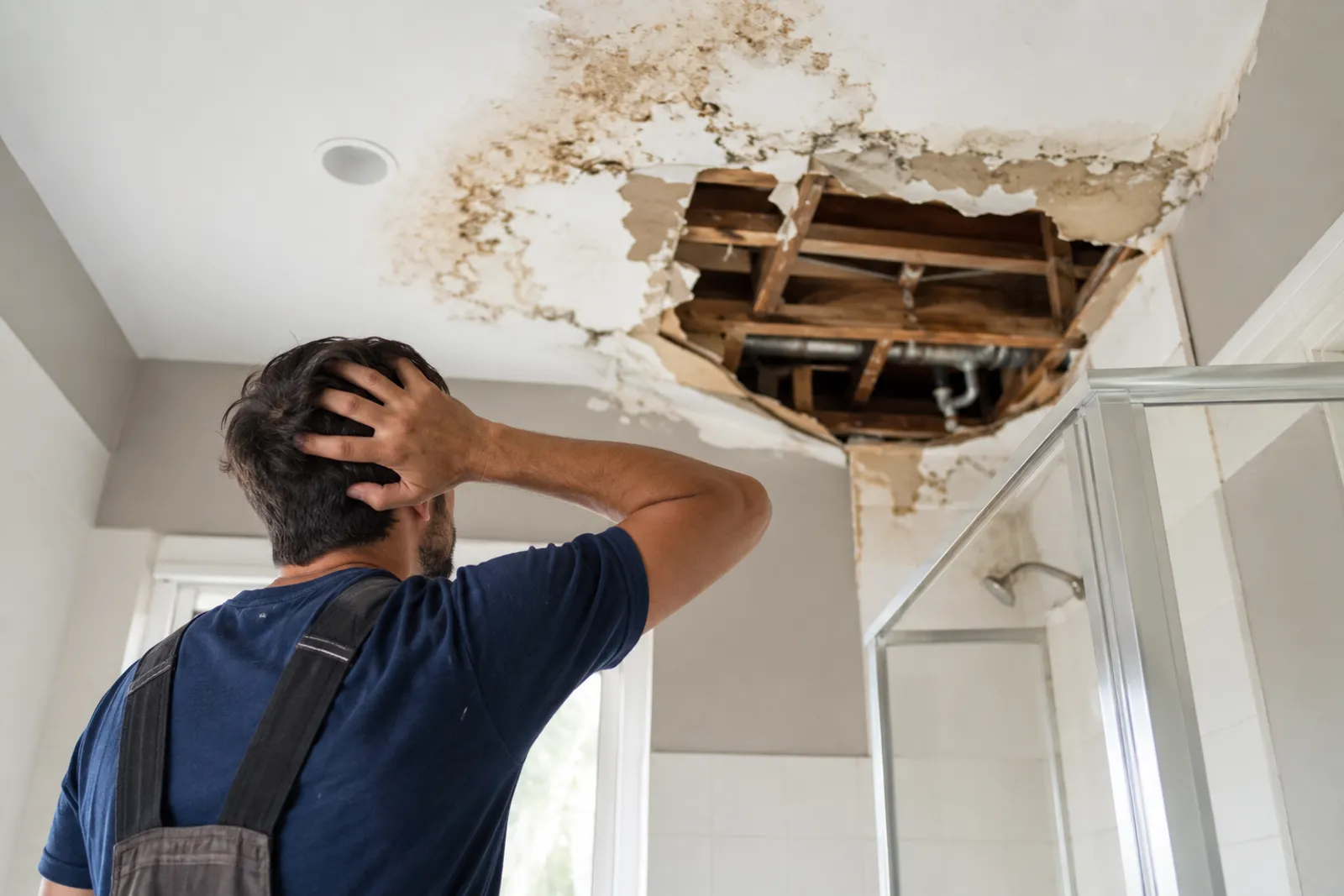
One of the most common questions we hear from tradies is:
“If I make a mistake on a job, does my public & products liability insurance cover it?”
The answer is: it depends on what has actually been damaged.
Public & products liability insurance is designed to protect your business if your work or products causes property damage or personal injury to someone else.
What it isn’t designed to do is pay for you to simply redo work that was done incorrectly in the first place.
That distinction is important, so let’s break it down.
Faulty workmanship vs damage caused by faulty workmanship
Let's say you’re a carpenter and you install a door incorrectly.
The door doesn’t close properly and needs to be taken off and rehung.
The cost of correcting that work itself would generally be considered rectification of faulty workmanship.
Now imagine you install the same door incorrectly, it comes off its hinges and damages the customer’s expensive timber flooring.
There are now two separate issues:
- the cost of fixing the incorrectly installed door; and
- the damage caused to the customer’s flooring.
Depending on the circumstances and the terms, conditions and exclusions of your policy, the resulting damage to the customer’s property may potentially fall within your public & products liability cover.
That’s why understanding the difference between your work and damage caused by your work matters.
Example 1: A plumber causes water damage
A plumber installs a fitting incorrectly.
A few hours later, the fitting leaks and water damages the customer’s kitchen cabinets and timber flooring.
The cost of replacing or correctly installing the faulty fitting itself may not be covered.
However, the resulting damage to the cabinets and flooring may be something your public & products liability policy responds to.
For a plumber, that difference could turn a relatively small mistake into tens of thousands of dollars of property damage.
Example 2: A painter spills paint
A painter is working inside a customer’s home and accidentally knocks over a tin of paint.
The paint damages a large section of newly installed carpet.
This isn’t necessarily faulty workmanship at all - it is accidental property damage arising while carrying out the job.
This is the type of situation public & products liability insurance is designed to respond to.
Example 3: A tiler has a waterproofing problem
A tiler completes work in a bathroom.
Months later, water begins leaking through to the room below and damages the ceiling and other parts of the property.
There may be a distinction between:
- The cost of removing and replacing the defective work, and
- The separate property damage caused by water escaping from the bathroom.
Claims like this can become complicated, particularly where your own work and the resulting damage are closely connected.
That’s why the exact circumstances of the claim, and the wording of your insurance policy, matters.
So does public & products liability cover bad workmanship?
Public & products liability insurance should not be thought of as a warranty on the quality of your work.
If something simply needs to be redone because it wasn’t completed correctly, public & products liability insurance should not be relied upon to cover the cost of putting that work right.
But if something goes wrong and causes separate damage to another person’s property or causes injury, there may be cover available under your public & products liability insurance.
Every claim is different, and coverage will depend on the circumstances and the terms, conditions, limits and exclusions contained in your policy.
Why this matters for tradies
A small mistake can sometimes cause a very large loss.
A poorly fitted plumbing connection might cost $50 to replace.
The water damage caused by that fitting could cost $30,000.
An incorrectly installed fixture might take an hour to fix.
If it falls and injures someone, the resulting liability claim could be considerably more serious.
That’s the risk public & products liability insurance is designed to help protect against.
Check that your insured occupation matches what you actually do
Another important consideration is making sure your insurer understands the activities your business performs.
For example, if you describe your business as carpentry but regularly perform other types of trade work that wouldnt usually be expected of a carpenter, you should make sure those activities are appropriately disclosed and covered.
The work you actually perform matters when an insurer assesses a claim.
At VIZ, tradies can select multiple occupations under the one policy and premium, helping businesses cover the different types of work they undertake.
The simple way to think about it
A useful starting point is to ask:
“Am I trying to fix my own work, or has my work caused damage to something else?”
If you’re simply fixing something you installed incorrectly, that may be considered rectification of your own work.
If your work has caused accidental damage to another person’s property or caused someone to be injured, that is where public & products liability insurance may become relevant.
The exact answer will always depend on the circumstances and your policy wording.
This article contains general information only and does not take into account your individual objectives, financial situation or needs. Coverage is subject to the applicable policy wording, terms, conditions, limits and exclusions. Always read the relevant policy wording and documents before deciding whether a product is suitable for you.