

Most people only think about insurance at two moments: when they buy it, and when something goes wrong.
But underneath every policy is a much older idea.
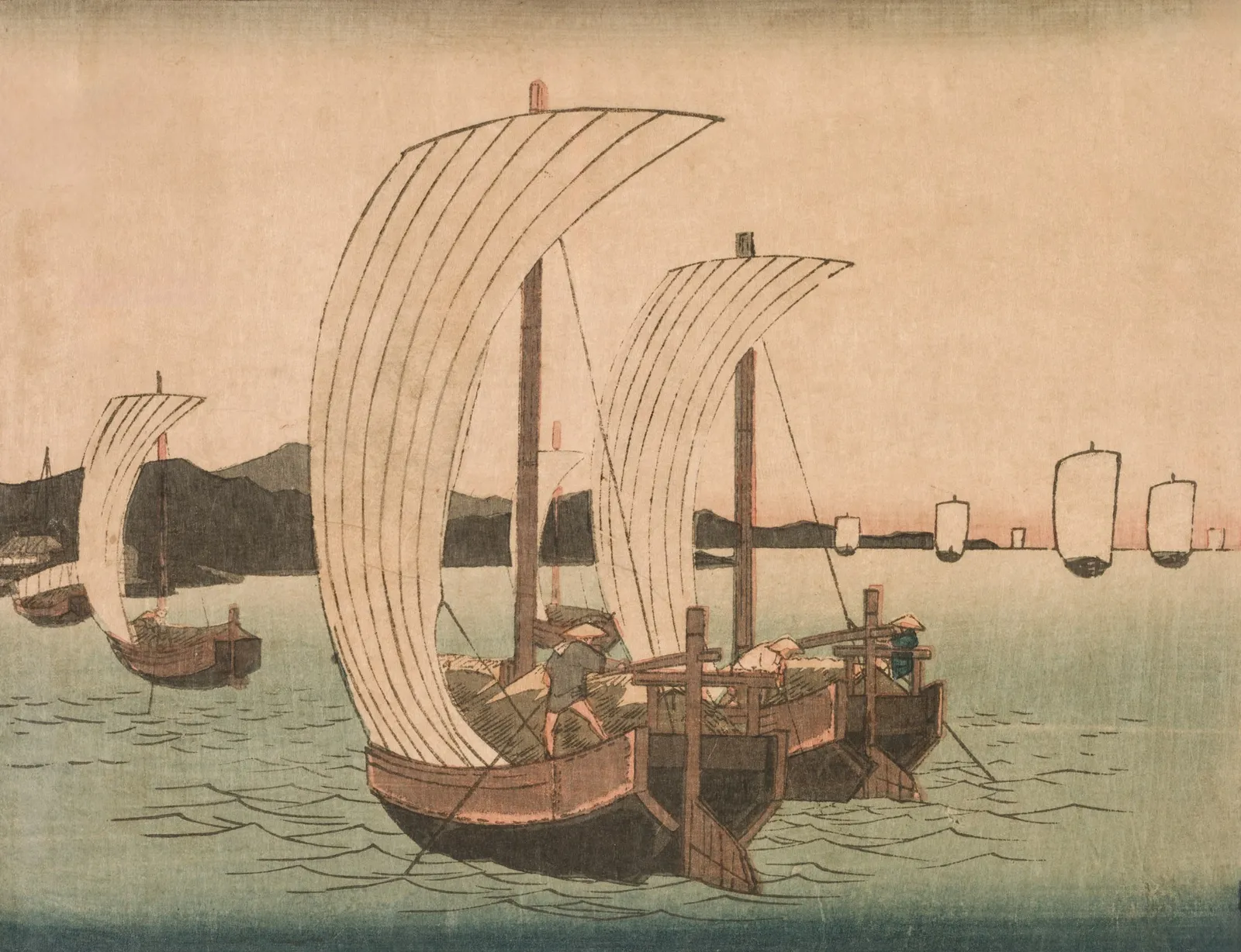
Thousands of years ago, Chinese merchants transporting goods along dangerous rivers faced a simple problem. If one merchant loaded everything onto one boat and that boat sank, they could lose everything.
So they spread their goods across multiple boats.
If one boat went down, everyone lost a little.
No one lost everything.
That is the basic idea behind insurance.
A small loss shared by many is better than a catastrophic loss suffered by one.
Modern insurance works in much the same way. Lots of people contribute to a pool. Most will not suffer a serious loss in any given year. A few will. The pool exists so those few do not have to carry the full financial consequences alone.
That is why insurance is most valuable for low-frequency, high-severity events.
A small business owner may be able to absorb a relatively minor loss.
A very large liability claim is a different matter.
Insurance exists to transfer certain risks from an individual or business into a broader pool.
Why not insure everything?
Because every additional thing we ask insurance to cover has a cost.
If we insure every small, common and predictable loss, premiums have to rise to fund those losses, along with the cost of administering them.
At some point, insurance stops being protection against financial shock and starts becoming an expensive way of paying for ordinary expenses.
This is one reason excesses exist.
An excess means part of a loss remains with the policyholder, while the insurance responds above that amount where the policy applies.
It is one of the ways risk is shared between the customer and the insurance pool.
Insurance works best for “what if?”, not “eventually”
A house might burn down.
Tools might be stolen.
Someone might be injured.
Those are uncertain events.
Tyres wearing out, paint fading or equipment needing routine maintenance are different. They are expected costs.
The closer something moves from “might happen” to “will happen eventually”, the less it behaves like an insurable risk.
Insurance is generally designed around uncertainty, rather than ordinary wear, maintenance or predictable expenditure.
Every policy draws a line
Every insurance policy makes decisions about what sits inside the pool and what sits outside it.
Broader cover usually means more risks are included.
That will often mean a higher premium.
Narrower cover usually means more risk remains with the customer.
That will often mean a lower premium.
Neither is automatically better.
They simply represent different approaches to what is included in the insurance contract.
That is also why comparing insurance only on price can be misleading.
Two policies may appear similar while drawing very different boundaries around what is and is not covered.
Some policies also give customers choices
Insurance does not always have to be one-size-fits-all.
Some products allow customers to select optional covers or different levels of cover, which changes how much risk sits inside the policy.
Tools cover is a simple example.
A tradie may have a relatively small amount of equipment, or they may carry tools worth many thousands of dollars.
A product that allows different levels of Tools of Trade cover can give customers some flexibility in how that exposure is insured.
At Viz, our Trade Pack is designed to provide practical choices around certain areas of cover, including Tools of Trade.
The idea is simple: not every customer has exactly the same business or the same exposure.
And those boundaries are not always perfectly clear
Insurance contracts are written documents, but real life is messy.
Facts do not always fit neatly into definitions.
Words can be interpreted differently.
The intent of a clause may sometimes need to be considered alongside its wording and the policy as a whole.
When genuine grey areas arise, insurers have a responsibility to interpret policies fairly and reasonably.
Customers should be able to understand what they are buying.
Insurers should be able to explain where the boundaries sit.
Both matter.
A better way to think about insurance
When something is not covered, the useful question is not always:
“Why won’t the insurer pay?”
Sometimes the more useful question is:
“Was this type of loss intended to sit inside the insurance pool in the first place?”
That is the trade-off at the heart of insurance.
Good insurance is not insurance that covers everything.
It is insurance that clearly defines which risks are being transferred, which remain with the customer, and what the customer is paying for that protection.